
Checking for a Warrant in Surrency
Surrency publishes no online warrant lookup of its own. No police site, court clerk page, or payment portal stands on its own here. So work the phones instead: tell the first office what event raised the concern, whether a ticket, a missed date, or a police contact, and ask which court now holds the case.
- Call Surrency City Hall at (912) 367-3816 for current municipal routing.
- Ask whether a city court, city clerk, or contract law-enforcement contact holds the matter.
- For county status, call the Appling Sheriff at (912) 367-8120.
- For a court file, call the Appling Clerk at (912) 367-8126.
- Confirm whether process is active and ask the issuing court about resolution.
Georgia’s official instructions send warrant checks to the county level, so a Surrency resident starts with the local offices. Two cautions come with that: bring identification if asked, and know that walking in can end in custody.
Surrency City Hall Warrant Route
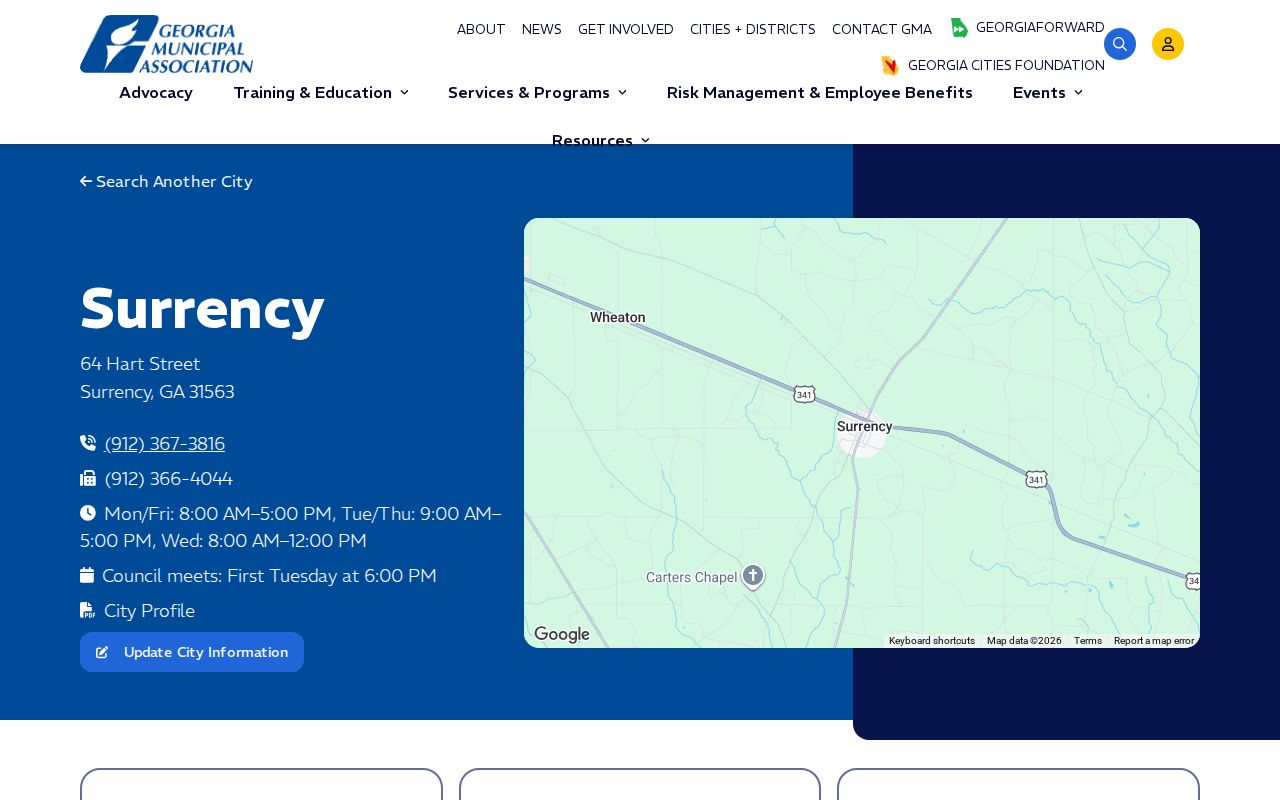
The Georgia Municipal Association profile puts City Hall at 64 Hart Street, Surrency, Georgia 31563, with fax number (912) 366-4044. Since the city runs no separate public municipal warrant office, City Hall is the practical first call. The profile itself lists the city’s public contact details and its schedule.
A phone call to City Hall can point you to the right desk. It cannot reveal a live warrant status, a case balance, or whether a judge has recalled process. The court itself holds that answer.
Surrency Police and Municipal Court
Surrency keeps no independent police portal and no detailed municipal-court page in public view. That silence does not mean the city has no court. It means no public source names a separate Surrency search system, clerk number, judge, or payment rule, so City Hall remains the place to ask for the current route. Police protection in Surrency is furnished by the Appling County Sheriff’s Office under contract, according to the Georgia Department of Community Affairs comprehensive plan. The Sheriff also serves as the county’s main serving agency for warrants. For a law enforcement question, then, the Sheriff is a practical status contact. The issuing court still controls any recall or judicial action, so keep the two roles straight: City Hall routes municipal questions, the Sheriff answers county agency questions, and the correct court answers its own case.
Surrency Warrant Office Hours
Surrency’s City Hall hours shift through the week. The GMA profile lists Monday and Friday from 8:00 a.m. to 5:00 p.m., Tuesday and Thursday from 9:00 a.m. to 5:00 p.m., and Wednesday from 8:00 a.m. to noon. Call before you drive over. Those posted hours can change without much notice.
Call first: Surrency’s midweek schedule differs, and the city may need to route a warrant question to another office.
When you call, get the name or title of the receiving office, its phone, and whether it takes status requests over the phone. Hold back personal details too. Do not email a birth date or ID image until City Hall confirms the address. A closed office or an unanswered call proves nothing about a warrant either way.
Surrency Warrant Types
Where a notice came from matters more than a Surrency mailing address. A city ordinance or citation issue may follow municipal routing. A county traffic, misdemeanor, felony, or preliminary matter belongs to an Appling court instead. Failure to appear, often shortened to FTA, means missing or failing to respond to a required court setting.
| Warrant type | Possible source | First route |
|---|---|---|
| City bench warrant | Missed municipal setting, if issued | Surrency City Hall |
| Ordinance process | Unresolved city matter | Current municipal route |
| County bench warrant | Missed Appling court duty | Issuing county court |
| Arrest warrant | Probable-cause review | Sheriff and issuing court |
Surrency bench warrants usually trace back to a missed court date or ignored court order. An arrest warrant is different. It rests on a judge's finding of probable cause, so treat no rumor or same-name result as proof of either.
Surrency Citations Versus County Cases
A Surrency citation is not the same thing as an Appling County criminal case. Ask who wrote the document. Check which court is named on it. Confirm where the appearance was set. Surrency relies on a contract police model, which blurs the enforcement label, but it does not merge the court files. State Court handles county misdemeanors and traffic cases. Superior Court handles felony trials, while Magistrate Court handles lower-level warrant and preliminary matters. The elected Appling Clerk keeps the adult Superior and State records, and for State Court traffic the Clerk’s official traffic page lays out the county route.
Note: The agency that serves a Surrency warrant may differ from the issuing court, which is the only office that can recall it.
Inside a Surrency Warrant Record
Surrency publishes no sample warrant record. Georgia's blank citation and committal forms show the usual fields, but a form is a template, not evidence of any local active warrant. When you call, ask the office to separate a docket entry from current enforcement status.
| Warrant or case number | The identifier assigned by the issuing court. |
|---|---|
| Identity | Name and birth date used to avoid a false match. |
| Charge or ordinance | The alleged act tied to the process. |
| Issuing court | The court able to alter or recall the warrant. |
| Bond or amount | A court-set condition, if one is available. |
| Status | Active, served, recalled, or quashed at a stated time. |
Recalled means the court withdrew it. Quashed means set aside, and served means executed, so ask a Surrency clerk when the status was last checked.
Surrency Has No Payment Schedule
Surrency publishes no fine schedule. There is no online citation portal either. The city also posts no warrant-recall form and names no recall charge. That gap tempts people to borrow the payment rules of Baxley, Graham, or Appling State Court, but resist it. Each system sets its own method, timing, and need for a judge's order. Call City Hall first. Ask whether Surrency accepts payments at all, which court owns the matter, what payment types work, and whether money alone recalls the warrant. If State Court holds the case, call the Appling Clerk before using the county portal. That portal's after-5:00 p.m. next-workday warning covers its own bench-warrant payment flow only. It does not reach Surrency automatically. Keep your receipt. A receipt proves payment, yet it may not prove the case, suspension, probation term, or warrant is cleared.
How Surrency Warrants Fit County Records
Surrency contracts its policing, so agency questions often land with the Appling Sheriff. Court ownership still controls the records, though. Georgia has no single statewide warrant portal. County files may sit with the Sheriff, Superior Court, State Court, or Magistrate Court, and the Appling County warrant records overview maps each route.
Warrant flow: Surrency City Hall for municipal routing › Appling County Sheriff for contract or county enforcement › issuing court for final status.
This county handoff is the one step a Surrency search truly needs. The Sheriff's Most Wanted page sits empty now. Do not treat it as a full search anyway, since a curated list is only a subset even when filled.
Why Surrency Calls Start Differently
Surrency counted 194 residents in the 2020 Census. That makes it Appling County's smallest incorporated place. Small size explains why Surrency posts none of the standalone police, court, and payment pages a larger city would. It does not excuse sloppy routing. The DCA plan's contract-policing statement is the key operational fact here. Start at Surrency City Hall for a clearly municipal matter. Go to the Sheriff when the question concerns county-held records or enforcement. When neither office can confirm judicial status, find the issuing court and ask its clerk. Surrency runs no warrant roundup, amnesty event, public roster, or special surrender program. Standard routes remain: court, clerk, Sheriff, bond, attorney.
Surrency Warrant Records and Public Access
Describe the record precisely when you request it. Give the date range, any known number, and your preferred format. Georgia access law opens many agency records but shields pending investigations, confidential methods, personal data, sealed cases, and juvenile material. If part of a file is exempt, ask Surrency for the releasable portion.
Key rules:
Georgia Open Records Act, O.C.G.A. §§ 50-18-70 et seq. is the agency-record framework.
The Attorney General’s Citizens Guide explains requests, timing, and agency responses.
Georgia juvenile-record authority describes special confidentiality boundaries.
Surrency City Hall names the municipal custodian. For county files, the Sheriff's official Open Records Request form covers releasable agency records, and the Appling Clerk handles adult Superior and State files.
Confirm Surrency Warrant Status Separately
You may need three separate answers. One covers the court record, one the live warrant status, and one any payment or recall status. Ask Surrency staff who entered the process, who can withdraw it, and whether the serving system has received the new order.
- Write down the court and exact case number.
- Ask whether status is active, served, recalled, or quashed.
- Confirm whether a payment route actually applies.
- Ask about bond, counsel, a new date, or surrender.
- Record the date, time, and office that confirmed the result.
If custody is possible, get counsel first. A Surrency system update can lag behind a signed order, so recheck after any court action.
Verify Surrency Warrant Answers
Before calling about a Surrency warrant, collect your papers. A citation, notice, bond paper, or prior Surrency case number helps every office you reach. Read court and agency names exactly as written. Because Surrency uses contract police protection, the place on a document may not reveal which court owns the case. Surrency City Hall routes a municipal question. The Sheriff answers for agency records. The issuing court controls recall. When an office cannot disclose a full record, ask whether it can at least identify the issuing court or release a non-exempt part. Identity rules, a pending investigation, or sealed and juvenile status can all narrow access. Those limits prove nothing about a Surrency warrant either way. Note the date of each reply. Ask when to recheck after a new order, and keep any receipt or signed order you receive. Counsel can help plan a safe response when a Surrency appearance might end in custody. Surrency's online footprint is thin. A written call log becomes genuinely useful, so record whether City Hall pointed you to a municipal official, the Sheriff, or a county clerk. That note spares the next caller. When two offices answer a Surrency question differently, return to the issuing court and give the time of both checks. A signed order controls more than an old listing, but staff may still need it transmitted. Ask when the transfer occurs and who confirms receipt.