
Appling County Arrest Warrants Explained
An arrest warrant is not a request an officer fills out on his own. A judge or magistrate looks at a sworn complaint, affidavit, or other lawful presentation first. The question is narrow: does probable cause support the offense described? Only then does the court sign judicial process that lets officers take the named person into custody. The Georgia court navigation source lays out the trial-court roles behind an Appling County arrest warrant, and which court does what.
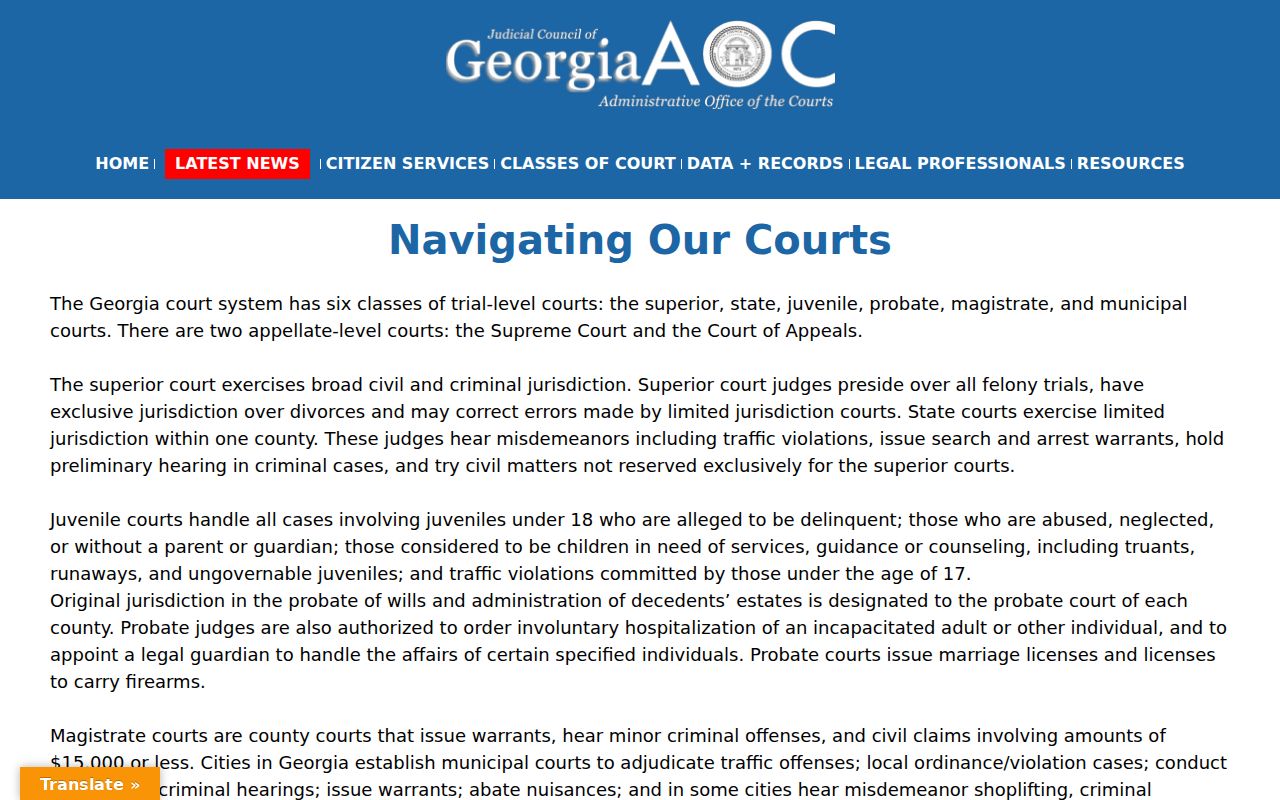
Which court handles the warrant depends on the case type. The Georgia court navigation guide explains the split. State Court can issue arrest and search warrants and hold preliminary hearings. Magistrate Court takes the warrant-related preliminary functions, Superior Court handles felony trials, and municipal courts may issue city process. An Appling County arrest warrant can therefore start in more than one office.
Appling County Arrest Warrant Review
A complaint in Appling County can travel to a judicial officer through the Sheriff, Baxley Police, Graham Police, or another authorized agency. The judge weighs the facts. Signing a warrant is not the same as deciding the whole criminal case. Once issued, the warrant states the authority for arrest and ties the event to a court matter, and later filings may add a committal decision, accusation, indictment, bond order, or disposition. The source document matters here. A sworn filing can name the person, the alleged offense, the officer, the date, the court, and the factual basis, and generic magistrate materials also carry warrant numbers, charges, a probable-cause finding, and whether a matter is bound over to Superior Court. Those statewide forms are blank field examples, though, not current Appling County arrest warrant entries, and no personal row appears on this page.
Inside a Appling County Arrest Warrant
Appling County publishes no public arrest-warrant table to browse. Blank Georgia forms and court schemas still show which fields you can ask the Clerk or Sheriff to read out. A court file may hold more detail than an officer can share while an inquiry is active. And a docket note can lag behind live service status, so treat it as one clue, not the last word.
| Warrant or case number | A court identifier, such as WARRANT NUMBER ON FILE; no Appling public format was confirmed. |
|---|---|
| Named subject | The legal name and available identifiers used to distinguish people with similar names. |
| Charge or basis | The alleged offense or process basis stated in the judicial record. |
| Issuing court | The judge and court that authorized the process and controls later court action. |
| Issue and status dates | The issue date and any later served, recalled, quashed, or superseded entry. |
| Bond information | Any release condition entered through authorized court or jail procedure. |
Always ask when the status was last checked. "Active" is time-sensitive, and only the responsible office can confirm whether an Appling County arrest warrant is still enforceable.
Appling County Arrest Warrant Channels
Georgia runs no public statewide warrant-name portal. Its existing-warrant instructions point you to the sheriff of the county where the warrant issued. For Appling County, that means calling the Sheriff at (912) 367-8120. Have the full legal name, birth date, and any case or warrant number ready. Ask whether the answer is current, and whether a written request or court confirmation is required.
- Use the Sheriff for county law-enforcement status and routing.
- Call the Appling Clerk at (912) 367-8126 for Superior or State Court file questions.
- For lower-court process, contact Magistrate Court or the city court that may have issued it.
- Use PeachCourt only for documents tied to a known case; it requires an account and is not a live warrant list.
- Use the Sheriff Open Records Request form for a narrow request for releasable material.
Georgia warns that a sheriff may answer by phone or insist on identification in person. If the warrant is active, showing up can mean custody. Get legal advice before you walk into an Appling County office.
Serving Arrest Warrants in Appling County
The Baxley government page documents a city law-enforcement route within Appling County.

The court issues process; an authorized agency serves it. In Appling County that agency is usually the Sheriff, the main serving force countywide. Baxley Police and Graham Police cover their city routes, and Graham notes the Sheriff also holds jurisdiction inside the city. No county constable or marshal warrant unit appears in the local directories. Service can happen during direct contact, at booking, at a traffic stop, or through an arranged surrender. Once a person is in custody, jail routing, first appearance, bond, and the court case become separate steps. Graham publishes one unusual local split: Graham municipal cases are transported through Jeff Davis County Jail, while Appling Superior and State felonies and most nontraffic misdemeanors go through Appling County Jail. The jail location never changes which court issued the warrant. Federal process is a different track entirely. Appling lies in the Brunswick Division of the Southern District of Georgia, where the U.S. Marshals Service serves federal operations. A county warrant check does not clear federal process.
Appling County Arrest Warrant Access
The Georgia Open Government page sets the state access framework for Appling County arrest warrant records.
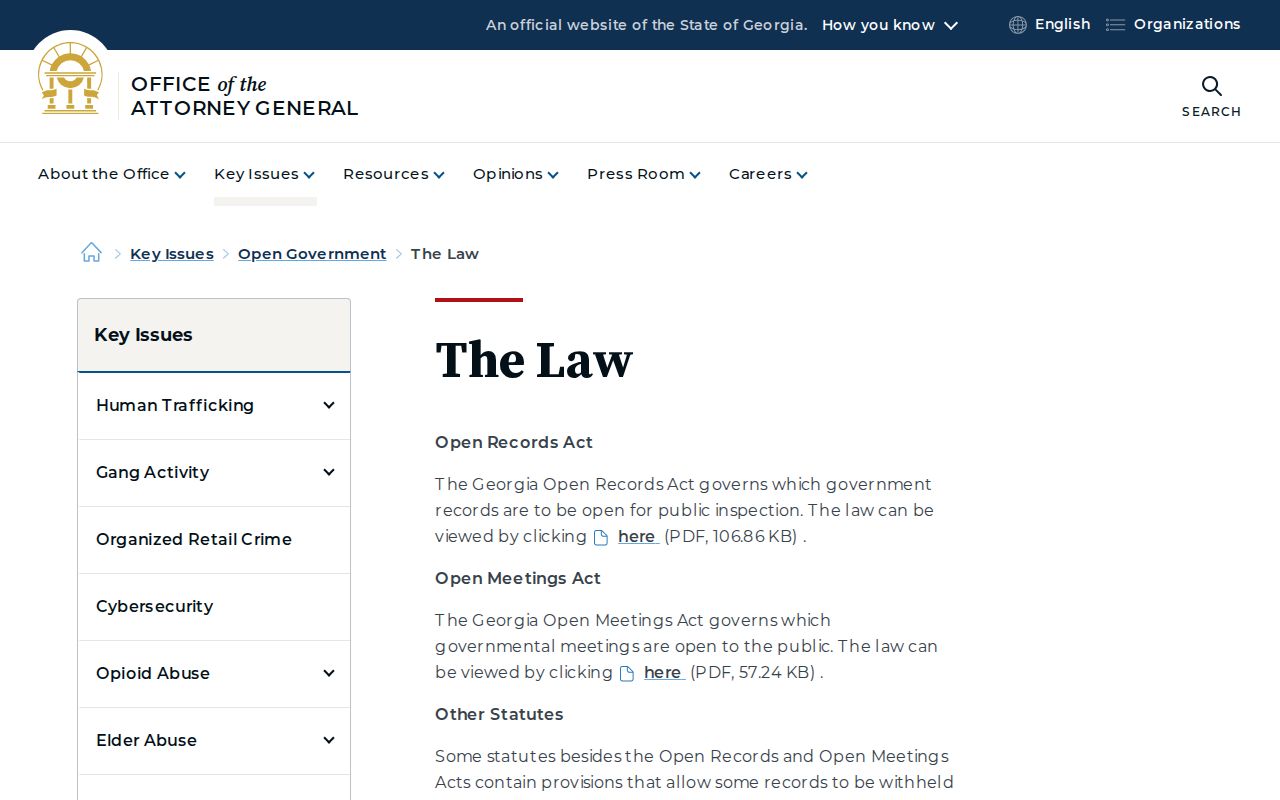
Georgia's Open Records Act sets the rules for what a local agency in Appling County must disclose. The state's official page routes local questions there. When you want a releasable record, the Sheriff's Open Records Request form is the most direct online route. It asks for your contact details, any case information you know, incident dates, the specific item, and a description. Make the request focused. Ask for the warrant number, the issuing court, the issue date, the stated charge, a status date, and any recall or service entry the agency can release. The Act generally demands production in a reasonable time, with a response ordinarily inside three business days. That is no promise of a full arrest-warrant file. Pending-investigation material, confidential investigative records, surveillance, prosecution files, sealed records, and juvenile limits can all apply. When something gets redacted or denied, the agency should name the legal authority and hand over any segregable non-exempt portion the law permits.
Access point: A withheld affidavit does not prove a warrant exists, and an open docket does not guarantee live service status.
Comparing Arrest, Summons, and Bench Warrants
An arrest warrant, a summons, and a bench warrant call for different responses. The label on the paper or docket entry matters. Treating every item as the same thing can send an Appling County resident to the wrong office, or breed the false hope that a fee payment resolves a fresh criminal accusation.
| Feature | Arrest warrant | Summons | Bench warrant |
|---|---|---|---|
| Main command | Authorizes arrest | Directs a person to appear | Authorizes custody after a missed duty |
| Typical basis | Probable cause of an offense | A charge handled without immediate custody | Failure to appear or comply |
| Decision maker | Judge or magistrate | Court or authorized officer | The judge overseeing the matter |
| Next step | Counsel, surrender and bond planning | Attend as directed | Ask about recall, reset, payment, or appearance |
For missed court settings and the timing of a traffic-related recall, the Appling County bench warrant search goes deeper.
Appling County Arrest Warrant Bond
The Appling County Jail and the Sheriff share a listed address of 560 Barnes Street in Baxley. The Sheriff publishes (912) 367-8120. The 2026 Georgia Sheriffs' Association directory separately lists the jail at (912) 367-8121. Staff and routing change, so start with the current Sheriff channel and ask which number covers your case. The Sheriff also posts approved bonding-company contacts, but no universal Appling County arrest warrant bond amount or release schedule appears anywhere. A listed company does not prove what bond was set. Pay no one until the jail or issuing court confirms the agent's current approval, the correct jail, the warrant or case number, the bond type, the amount, and how you get a receipt. Bond frees a person on stated conditions. It does not dismiss the charge, erase the court file, or settle every other hold. Ask whether another city, county, probation, or federal process still blocks release.
Appling County Arrest Warrant Terms
A short label can hide a major difference. Ask the Appling County clerk or officer to use the exact term in the responsible system and to give you the date of the status check.
- Active
- Reported as presently enforceable by the responsible system at that time.
- Served
- Executed or otherwise served, though the underlying case continues.
- Recalled
- Withdrawn by the court; transmission to other systems may take time.
- Quashed
- Set aside through court action.
- Restricted or sealed
- Unavailable to ordinary public inspection under law or court order.
An old docket can still show an Appling County warrant that was served or recalled long ago. That is why a court document and a live law-enforcement answer respond to different questions.
If There's an Arrest Warrant for You
First, confirm the issuing court, warrant number, charge, and current status. Then ask counsel how the court handles voluntary surrender, first appearance, bond, and any motion to recall or quash. The Brunswick Circuit Public Defender is the official routing source for qualifying representation. Private counsel can also arrange contact with the court or jail. Trust no payment link, stale list, or text from an unknown sender. Appling County runs no countywide amnesty event and posts no standard arrest-warrant payment plan. If surrender is advised, confirm the correct jail and what identification, medication, bond arrangement, or paperwork you may need. Anyone with a Graham case should ask specifically whether custody routes through Jeff Davis County Jail or Appling County Jail.
Act carefully: Speak with counsel before a walk-in visit because an active Appling County arrest warrant can lead to immediate custody.
After any court action, get a copy of the recall, quash, service, or release order and ask when the update reaches the Sheriff's system. The underlying Appling County criminal case may stay open.